 Abhitech Wins Energy Conservation Award 2026



What Is LOI in Fly Ash? Causes, Limits and How to Reduce It
LOI (loss on ignition) is the percentage of weight a fly ash sample loses when it is heated to a high temperature in a laboratory furnace. In coal-fired boilers, almost all of that loss is unburnt carbon, so LOI is a direct measure of fuel that was paid for but never burned. High LOI raises coal consumption and can make fly ash unsuitable for cement and concrete, where Indian Standard IS 3812 limits LOI to 5%.
The scale is large. According to the Central Electricity Authority (CEA), 189 grid-connected coal and lignite power stations burned about 887 million tonnes of coal in 2024-25 and generated about 319 million tonnes of ash, of which 96.34% was utilised. Every percentage point of unburnt carbon in that ash represents coal energy lost and ash that is harder to sell.
This guide explains what LOI means, why it matters, what causes it, the limits that apply and how power plants and industrial boilers can bring it down.
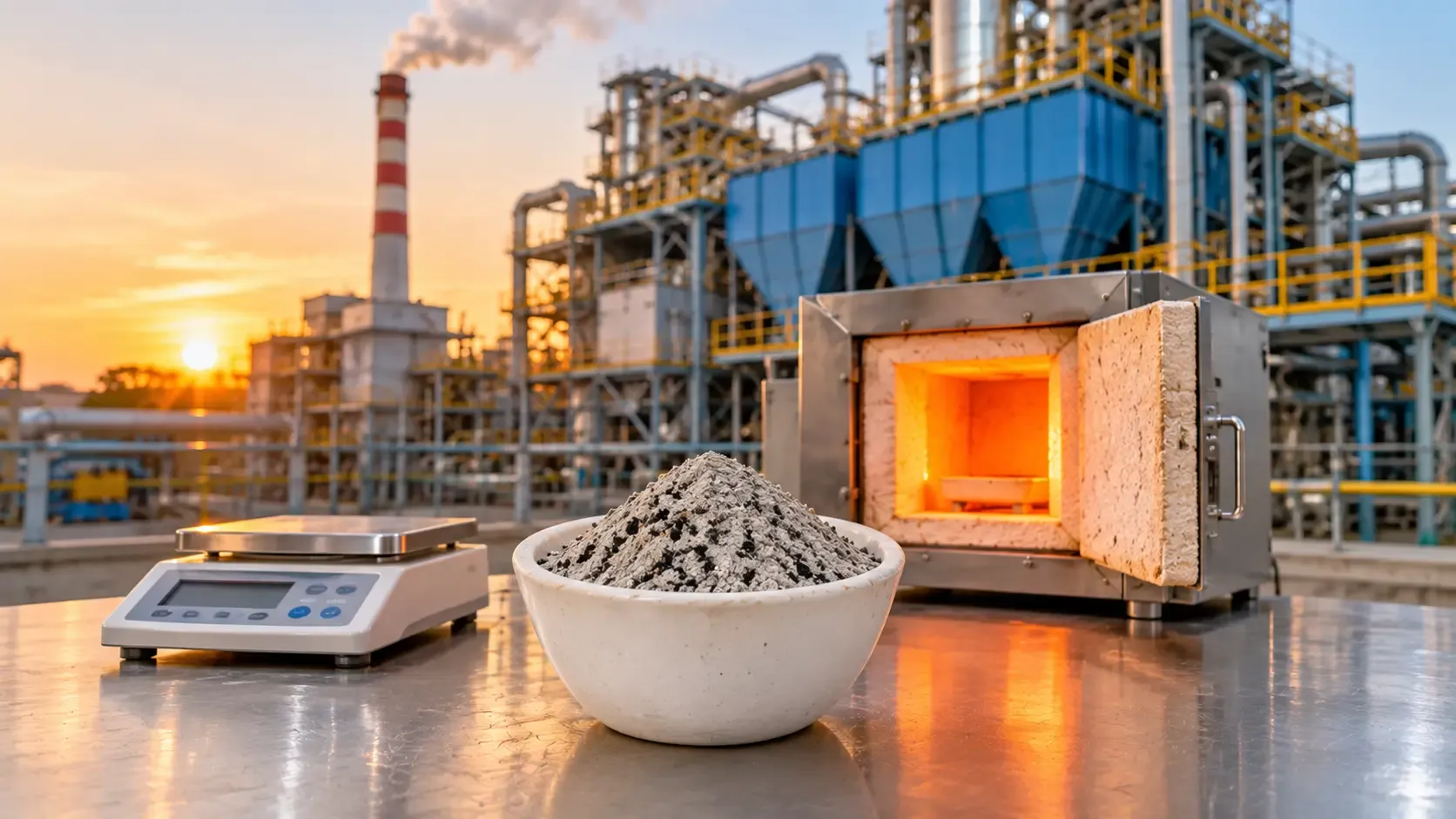
To test LOI, a laboratory dries a fly ash sample, weighs it and heats it in a muffle furnace using the method set out in IS 1727. The sample is weighed again after heating. The weight lost, expressed as a percentage, is the LOI.
Most of the weight lost is unburnt carbon that burns off in the furnace. Small amounts of moisture and carbonates can also add to the figure, so LOI is a close approximation of unburnt carbon rather than an exact measure. Bottom ash usually shows higher LOI than fly ash, because larger coal particles fall to the furnace bottom before they burn out.
- Lost fuel
- Carbon is the main source of heat in coal. Carbon left in the ash is fuel the plant has paid for but never used.
- Ash quality and sales
- IS 3812 (Part 1) caps LOI at 5.0% for fly ash used in cement, mortar and concrete. Unburnt carbon also raises water demand and absorbs concrete admixtures.
- Utilisation targets
- Power stations must work towards 100% fly ash utilisation under MoEF&CC notifications. High-LOI ash narrows the market for it.
- Boiler performance
- High LOI often comes with unstable flames, higher CO, slagging and a worse heat rate.
- Emission intensity
- More coal burned per unit of output raises emission intensity, a growing concern under the Carbon Credit Trading Scheme.
High LOI almost always traces back to coal particles leaving the furnace before they have fully burned. The common causes are:
- Coarse coal grinding. BEE guidance for pulverised fuel firing is that 75% of the coal should pass 75 microns. Worn mills or classifiers produce coarser coal that does not burn out in time.
- Poor air-fuel balance. Too little excess air, or uneven air distribution between burners, starves part of the flame of oxygen.
- Coal quality and blending. High-ash coal, low volatile matter and inconsistent blends make ignition and burnout harder.
- Short residence time. Running above design load or with a shortened flame leaves less time for particles to burn.
- Burner and furnace condition. Damaged burners, poor flame stability and slag deposits disturb combustion and heat transfer.
- IS 3812 (Part 1): fly ash for use in cement, mortar and concrete
- Maximum 5.0%
- EN 450-1: fly ash for concrete, Category A
- Maximum 5.0%
- ASTM C618: fly ash for concrete
- Maximum 6.0%
Source: IS 3812 (Part 1) reference summary. For boiler performance, there is no single target. Each plant sets its own based on boiler design and coal quality, and the trend over time tells you more than any single sample.
- Check mill fineness regularly. Run sieve tests on pulverised coal at least weekly and adjust classifier settings or service mills when fineness drops.
- Balance combustion air. Track O2 and CO at the economiser outlet and correct uneven air distribution between burners.
- Control coal quality. Test incoming coal for ash and volatile matter and keep blends as consistent as possible.
- Maintain burners and mills. Repair worn burner parts and grinding elements on a fixed schedule.
- Sample and trend LOI daily. Collect samples from ESP hoppers and bottom ash and plot the results, so changes are spotted early.
- Use a combustion catalyst. A catalyst improves burnout of coal particles on existing equipment, without capital spend.
THERMACT is Abhitech Energycon's patented combustion catalyst for solid fuels in boilers, kilns and furnaces. It speeds up combustion reactions and promotes more complete burnout of coal particles, so more of the carbon burns inside the furnace instead of leaving in the ash.
Power plants using THERMACT have reported:
- Lower LOI in fly ash and bottom ash.
- Lower coal consumption.
- Better flame stability and heat rate.
- Less clinker and slag formation.
We explain the combustion science in detail in Enhancing Boiler Efficiency with Thermact.
The benefit of lowering LOI is different for every boiler. It depends on variables that can change from day to day even within the same plant:
- Coal quality: ash, moisture, volatile matter and calorific value vary between coal sources and blends.
- Operating conditions: unit load, mill performance and excess air levels.
- Boiler design and condition: furnace size, burner arrangement and slagging tendency.
- Ash handling and sales: how much fly ash goes to cement and other uses.
This is why the value of a lower LOI can only be worked out for a specific plant, under its own operating conditions.
Abhitech's technical services team studies each case and works with plant managers to build a customised assessment based on actual operating data. Boiler efficiency can be evaluated in two ways:
- Direct method: compares the useful heat in the steam with the heat supplied in the coal.
- Indirect method: works out efficiency by measuring each heat loss, including unburnt carbon in ash, flue gas loss and moisture.
The indirect method is especially useful for LOI work, because it shows the unburnt carbon loss on its own. The team records a baseline under normal operation and reviews results with the plant team under comparable conditions. Our DSIR-recognised ARTIC R&D Lab tests coal and ash samples, including LOI.
- LOI is the weight fly ash loses on heating and is a close measure of unburnt carbon.
- IS 3812 limits LOI to 5.0% for fly ash used in cement and concrete.
- Coarse grinding, poor air balance and variable coal are the main causes of high LOI.
- The benefit of lower LOI is assessed for each plant under its own operating conditions.
- THERMACT improves burnout of coal particles on existing boilers.
- What is LOI in fly ash?
LOI (loss on ignition) is the percentage of weight a dried fly ash sample loses when heated in a laboratory furnace. In coal ash, the loss is mostly unburnt carbon.
- What is the maximum LOI allowed in fly ash for cement?
IS 3812 (Part 1) limits LOI to 5.0% for fly ash used in cement, cement mortar and concrete.
- What causes high unburnt carbon in fly ash?
The main causes are coarse coal grinding, too little or uneven combustion air, high-ash or low-volatile coal, short residence time in the furnace and poorly maintained burners or mills.
- How is LOI in fly ash tested?
A dried sample is weighed, heated in a muffle furnace following the method in IS 1727, and weighed again. The weight lost as a percentage of the original weight is the LOI.
- Is LOI the same as unburnt carbon?
Not exactly, but it is a close approximation. Moisture and carbonates can add slightly to LOI, while unburnt carbon accounts for most of it in coal ash.
- How quickly can a power plant reduce LOI?
Air balancing, mill fineness corrections and combustion catalysts can show results within weeks. A 4-8 week baseline followed by a trial period gives reliable data.